
Herbarium
The Herbarium: an archive of biodiversity
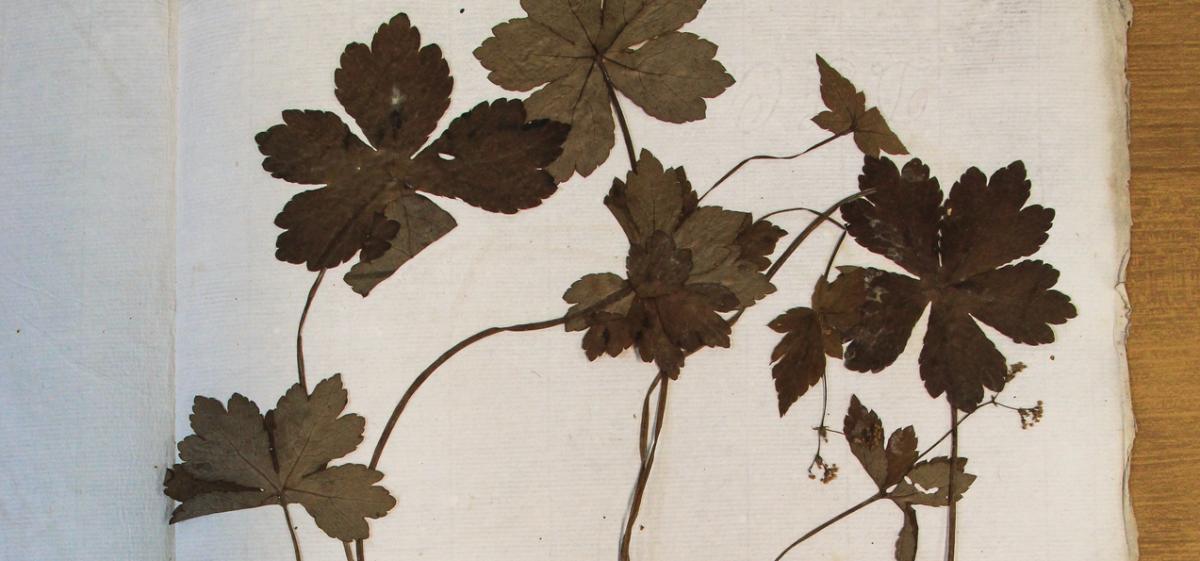
The Herbarium Horti Botanici Panormitani, identified internationally by the acronym PAL, was established in the early 18th century by the first director of the Botanical Garden, Giuseppe Tineo.
The Herbarium of the Botanical Garden has been enriched over the centuries thanks to the contribution of numerous scholars who have explored, collected, studied and dried plants from the Italian flora, the Mediterranean area and various parts of the world.
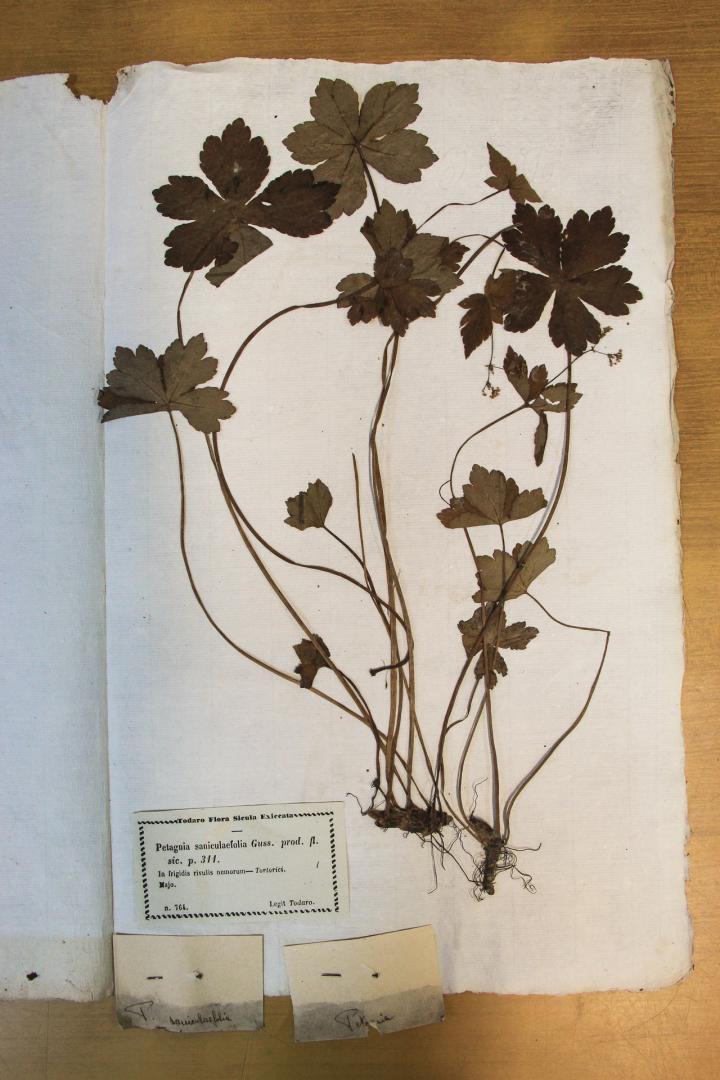
Today, the Herbarium houses a total of around 400,000 exsiccatae, which represent a fundamental tool for study and research in the fields of systematic botany, ecology, biodiversity and evolution.
Heritage and collections
The Herbarium houses specimens of vascular plants, ferns, mosses, liverworts, algae, fungi and lichens from Sicily and other parts of the world (Europe, Australia, Africa, the Americas).
An evolution of the ancient “General Herbarium” (approx. 200,000 specimens) and “Sicilian Herbarium” (approx. 60,000 specimens), the structure has seen its heritage grow. Recent collections, acquisitions and donations have significantly increased the Palermo Herbarium (a total of approximately 400,000 specimens), placing it among the most important in Italy.
The Herbarium is divided into various sections based on geographical origin and/or specific collections such as: E. Siculo, E. Generale, E. De Stefani, E. Porcari, E. Delphino, E. Pignatti, E. Giardina, E. di Sofia (Bulgaria), Israeli duplicates of the Florence Herbarium, historical duplicates of the E. Generale, the E. Greuter and various collections of botanical itineraries relating to explorations conducted in various European and non-European countries.
The Sicilian Herbarium contains approximately 80,000 specimens collected by numerous botanists and scholars such as: Father Bernardino da Ucria, a minor friar and demonstrator at the Botanical Garden, Bianca, Bivona-Bernardi, Borzì, Calcara, Carratello, Catanzaro, Certa, Citarda, Constantine Samuel Rafinesque-Schmaltz, an American naturalist who lived in Palermo until 1815, Di Martino, Domina, Gasparrini, Gianguzzi, Gibelli, Gussone, Heldreich, Huet du Pavillon, Ilardi, Inzenga, Lacaita, Lehmann, Lojacono Pojero, C. Marcenò, Mazzola, Minà Palumbo, Nicotra, Parlatore, Piraino, Porcari, Raimondo, Reina, Riccobono, Romano, Ross, G. Scafidi, Schicchi, Schimmenti, Sommier, Sorrentino, Strobl, Terraciano, G. Tineo, V. Tineo (1791-1846), Todaro (1818-1892) and a section of the Herbarium of G. Giardina (1943-2006) with approximately 12,000 specimens.
The General Herbarium (250,000 specimens), which is divided into two sections: Mediterranean and non-Mediterranean.
- The cryptogamic collections consist of around one hundred micro- and macrofungi and approximately 2,000 Mediterranean algae, most of which were acquired through exchanges made by Antonino Borzì in the late 19th and early 20th centuries.
- The bryophyte collection consists of 5,000 specimens from Todaro's collections, as well as from Husnot's Gallic moss collections, the Italian cryptogamic herbarium and a large number of specimens sent by U. Martelli, G. Weber, M. Schultze, A. von Wegener, S. O. Lindberg, F. Schultz, C. Warnstorf, as well as collections from Bivona Bernardi, Bottini, Carratello, Lojacono, Nyman, Raimondo, Todaro, and Zodda.
- The lichenological collection consists of approximately 1,600 specimens, mainly from collections such as the Italian Cryptogamic Herbarium, Gallic lichens from the Mougeot, Baietto, Carestia collections and various collections by D. Lanza, Merlo and Ottonello.
The Greuter Herbarium, abbreviated PAL-Gr, was established by Prof. Werner Greuter (former director of the Berlin Botanical Garden and Botanical Museum) and donated by him in December 2008 to the University of Palermo, where it is preserved in the Herbarium Horti Botanici Panormitani. It contains approximately 180,000 specimens, enriched year after year thanks to new acquisitions made by Greuter himself, such as the 19th-century herbarium of Abbot Pierre Gave of the Eastern Alps, the E. of Revenchon (from France, Corsica, Sardinia, Crete, Spain and Algeria); the herbarium of Sintenis (from Greece, Cyprus and Portugal); the herbarium of Heldreich (Greece); the herbarium of Gandoger (from Spain, Portugal, France and Crete); Murbeck's herbarium (Algeria); W. Schimper's herbarium (from France, Algeria, Egypt and the eastern Mediterranean), and various other herbariums belonging to illustrious European botanists such as Pinatzis, Phitos and Kamari, Bras and Breckle.
The Pignatti Herbarium (20,000 specimens) from Australia.
The PAL Herbarium is not simply a historical archive of specimens, but rather a dynamic and active scientific research environment, characterised by the study of flora and vegetation and continuous growth thanks to botanical explorations of Sicily, Italy, Europe and beyond, as well as exchanges of specimens with other institutions. the discreet and careful collection of samples, their drying, identification, sterilisation, mounting on cardboard and preservation, scanning and computerisation, maintenance and restoration. All these phases, carried out with passion and scientific rigour, guarantee the protection and growth of this great scientific, educational and cultural heritage, including through new discoveries, studies and fundamental research to understand the evolution of the environment in which we live.
Users include students of all levels, researchers, scholars such as botanists, archaeologists, ecologists, geneticists, climatologists, historians, artists and sociologists, both from Italy and abroad, who interact with the Curator and the Herbarium staff for a variety of requests ranging from on-site consultation of the exsiccata to research projects, theses and internships for systematic, morphological, historical and geographical studies.
Structure
The Herbarium collection was historically kept inside the Gymnasium; in 1994, it was moved to its current location, where it occupies an area of approximately 600 square metres, organised into:
- storage area: equipped with several cabinets with mobile shelving that store the exsiccatae.
- technical laboratory: this area is dedicated to the observation and taxonomic determination of samples using stereoscopes and microscopes. The delicate phases of maintenance, cleaning and drying of the specimens are also carried out here using special presses. The specimens, fixed to cardboard with pins or glue, are placed in a paper “jacket”, protected by a folder and finally archived in files. The cycle ends with sterilisation in a climate-controlled chamber and the final placement of the exsiccata in their respective sections of the Herbarium.
- library: a small specialised collection to support research.
Virtual Herbarium
In line with the highest international standards, over the last decade the Herbarium of the Botanical Garden of Palermo has implemented a modern IT infrastructure dedicated to the creation of the Virtual Herbarium. This online database allows remote consultation of herbarium specimens (exsiccata), eliminating the risk of damage resulting from direct handling and thus preserving the physical integrity of the originals.
DATABASE ARCHITECTURE
The system is divided into two integrated levels:
- iconographic archive: high-resolution images acquired using a precision “planetary” scanner (BookEye 3). Thanks to the Zoomify plugin, researchers can analyse the morphological details of the exsiccata directly from their browser. The images are stored in TIFF format at 600 dpi (approximately 216MB per file) on dedicated servers, ensuring maximum visual fidelity and long-term preservation of the Botanical Garden's historical memory;
- analytical archive: a relational database (developed in SQL/ASP) that digitises the information on the original labels: taxonomic nomenclature (family, genus, species), collection data (location, altitude, habitat, coordinates), collector and identifier.
DIGITAL HERITAGE
Currently, the portal offers access to approximately 120,000 records and over 80,000 images, covering 20% of the entire heritage of the Palermo Herbarium. Among the collections already digitised, the most important historical and scientific collections stand out, such as the Bràs and Greuter herbariums and the former Sicilian Herbarium.
ADVANCED FUNCTIONALITIES
The Virtual Herbarium is not only an archive, but also a dynamic research tool that offers:
- advanced search using complex query masks to filter data by taxonomy, chronology or author.
- georeferencing of samples with coordinates, through the integration of a Google Maps-based cartographic display to accurately locate the collection site.
The creation of a virtual herbarium is a crucial tool for promoting scientific study and appreciation and expanding the sharing of the rich scientific heritage preserved in the PAL Herbarium, facilitating global access to collections that are often unique and rare.
Regulations and conditions for consulting the Herbarium
ACCESS PROCEDURES
- Target audience: The Herbarium of the Botanical Garden of the University of Palermo can be visited/consulted by researchers, doctoral students, students, and scholars.
- Reservations: Consultation is by appointment only, upon request via email to the Curator.
- Opening hours: Monday to Friday, from 10:00 to 13:00 (excluding public holidays and subject to staff availability).
- Registration: upon arrival, visitors must sign the attendance register.
GENERAL RULES OF CONDUCT
- The main doors and windows must remain closed at all times.
- Smoking is strictly prohibited throughout the building.
- Optical instruments, equipment and library volumes must be used with the utmost care and returned to their place on the tables after use.
SAMPLE MANAGEMENT PROCEDURES
- Introduction of fresh material: it is forbidden to bring fresh plants into the conservation rooms. New material must be stored exclusively in the rooms dedicated to preparation and disinfestation.
- Storage and donations: donated herbarium specimens must be in excellent condition and accompanied by a complete label (taxonomy, origin, date, collector and identifier). The donor is required to fill in the appropriate donation register.
CONSULTATION OF EXSICCATA
- Handling: samples may only be removed by internal staff. They must be handled with extreme care, always keeping them in a horizontal position and facing upwards.
- Repositioning: at the end of the consultation, samples must be placed back in the folder in their original order and position. The relocation of folders to the archives is the sole responsibility of staff.
- Integrity of specimens: it is forbidden to remove seeds or parts of plants. Any fragments that have accidentally detached must be collected in the special bags provided by staff. Requests for specimens for study purposes must be sent by email to the Curator.
- Revisions and annotations: comments or taxonomic corrections should not be written on the original labels. Please contact the staff, who will provide specific labels to be completed, dated and signed.
- Typo specimens: the identification of any Typo specimens must be reported to the staff, who will place them in separate folders.
LOAN AND REMOVAL OF MATERIAL
- Prohibition on removal: exsiccatae may not leave the Herbarium for any reason without the formal authorisation of the Director.
For any specific requirements not covered by these regulations, please contact the Curator or the staff in the reading room.
Info
Herbarium code: PAL
CITES: IT-001
Address: Via Lincoln 2, 90123 Palermo - Italy
Arch. Natale Surano
Responsible for the management of infrastructure and landscape aspects